AI Is Writing Your Plugins Now: The New WordPress Supply-Chain Risk
AI now writes a growing share of the plugins and themes on live WordPress sites, faster than anyone can review. That is a new supply-chain risk: not malicious code, but under-reviewed AI code carrying a higher defect rate into plugins you trust. How to defend your site.

The WordPress supply chain used to be a question of trust in people: was this plugin author reputable, was this theme from a source you believed in. In 2026 there is a new link in that chain nobody vetted, and it is inside code you already trust. AI now writes a large and growing share of the plugins, themes, and snippets running on live WordPress sites, and much of it ships with less human review than any code in the platform’s history. The risk is not that an AI is malicious. It is that fast, confident, under-reviewed AI code is flowing into the plugins forty thousand sites depend on, and the security-relevant mistakes travel with it.
This is about the new shape of WordPress supply-chain risk: how AI changes where vulnerabilities enter, why the usual checks miss it, and what a site owner or developer can actually do to defend against code whose real author is a model.
What supply-chain risk means for WordPress
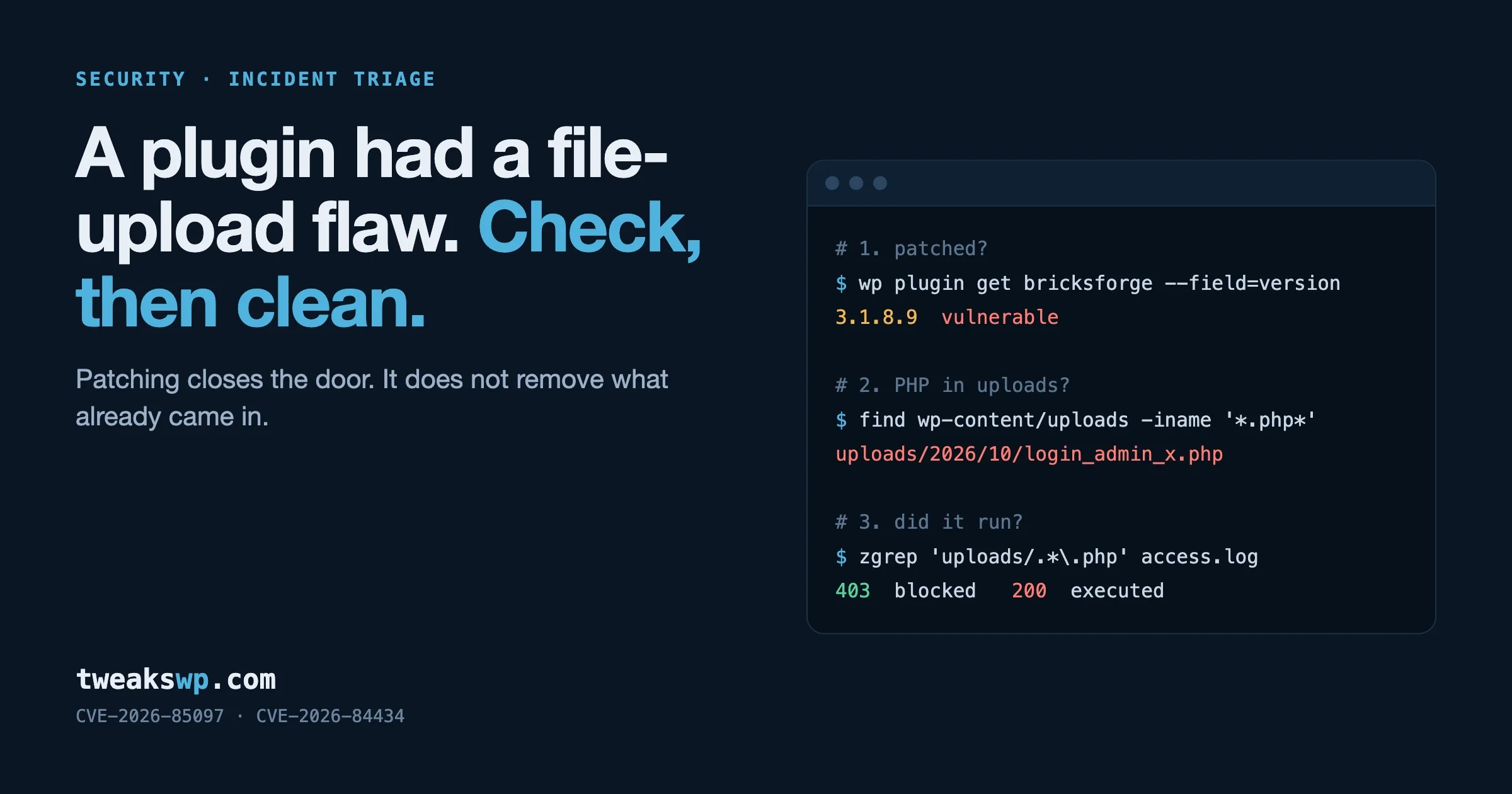
A supply-chain attack, or failure, is when the compromise enters through something you trusted rather than through your own site directly. In WordPress that trust chain is long: you trust a plugin author, who may trust a library, who may trust a contractor, whose code runs with full privileges on your site. A single weak link anywhere in that chain becomes a weakness on every site that installed the plugin. This is why one vulnerable popular plugin can expose hundreds of thousands of sites at once, and why the patch-gap between a fix and sites applying it is so dangerous, as the Gravity SMTP incident showed.
How AI changes the picture
AI inserts a new, unvetted link into that chain. Plugin authors, contractors, and hobbyists now generate large amounts of code with AI and ship it, often without the security review the code needs. That matters because AI-generated code is measurably more likely to contain vulnerabilities, and the mistakes it makes are the WordPress-specific ones: missing capability checks, unsanitized input, unescaped output, raw queries built from request data. When that code lands in a plugin used across many sites, the flaw is not one site’s problem; it is distributed to everyone who trusts that plugin.
The unsettling part is that nothing looks wrong. There is no malicious author, no obviously bad commit. There is just more code, produced faster than anyone can carefully review, quietly carrying a higher defect rate into the ecosystem. The supply chain did not get attacked; it got diluted, and dilution is harder to see than an attack.
Why the usual checks miss it
The defenses WordPress users rely on were built for a different threat model, and they do not catch this one cleanly.
- Reputation does not help. A trusted, popular plugin from a known author can still ship AI-generated code with an unreviewed flaw. Trust in the author no longer implies review of the code.
- Checksums verify integrity, not safety. A signed, unmodified plugin is guaranteed to be the code the author shipped, not guaranteed that the code is secure. You can perfectly verify a vulnerable file.
- Malware scanners look for known bad patterns. An AI-introduced missing capability check is not malware; it is an ordinary bug that a signature scanner is not built to flag.
- Update-and-forget assumes updates are safe. Auto-updating is good hygiene against known holes, but it also pulls in the newest AI-written code the moment it ships, before the ecosystem has vetted it.
None of these are useless; they are just aimed at yesterday’s supply-chain problem. The AI-diluted supply chain slips between them.
How this actually plays out
Picture the path from mistake to incident. A developer building a popular plugin asks an AI to add a feature, an endpoint that saves a setting. The model returns clean, working code, and because it looks finished and passes a quick test, it ships in the next release. The code has no capability check, so any logged-in user can call it. Nobody wrote that flaw on purpose; the model simply skipped the security line and the polish hid the gap.
That release auto-updates to tens of thousands of sites overnight. Weeks later a researcher finds the hole, it gets a CVE, and now every site that has not updated is exposed, while attackers scan for the ones that lag. No stage of this involved malice or an obvious red flag. It was ordinary AI-assisted development moving faster than review, and the result is a distributed vulnerability that behaves exactly like a supply-chain attack while being nobody’s attack at all. That is why it is hard to defend against with the old mindset: you are looking for a villain, and there is only speed.
How to defend your site
You cannot personally audit every plugin, but you can shrink your exposure and catch more of what matters. Defense here is about reducing trust surface and adding review where it counts.
Minimize your plugin footprint
Every plugin is a link in your supply chain, so the fewer you run, the smaller your exposure. Remove plugins you do not use, prefer one well-maintained plugin over three overlapping ones, and treat each addition as taking on the risk of whoever, or whatever, wrote it. A lean plugin set is the single highest-leverage supply-chain defense.
Prefer actively maintained, security-responsive plugins
The value of a good author is not that their code is flawless; it is that they respond fast when a flaw is found. Choose plugins that patch quickly and communicate clearly about security, because in an AI-diluted ecosystem the ability to fix fast matters more than the pretense of never having bugs. Abandoned plugins are the worst case: unreviewed code that no one will ever patch.
Review the code you add yourself
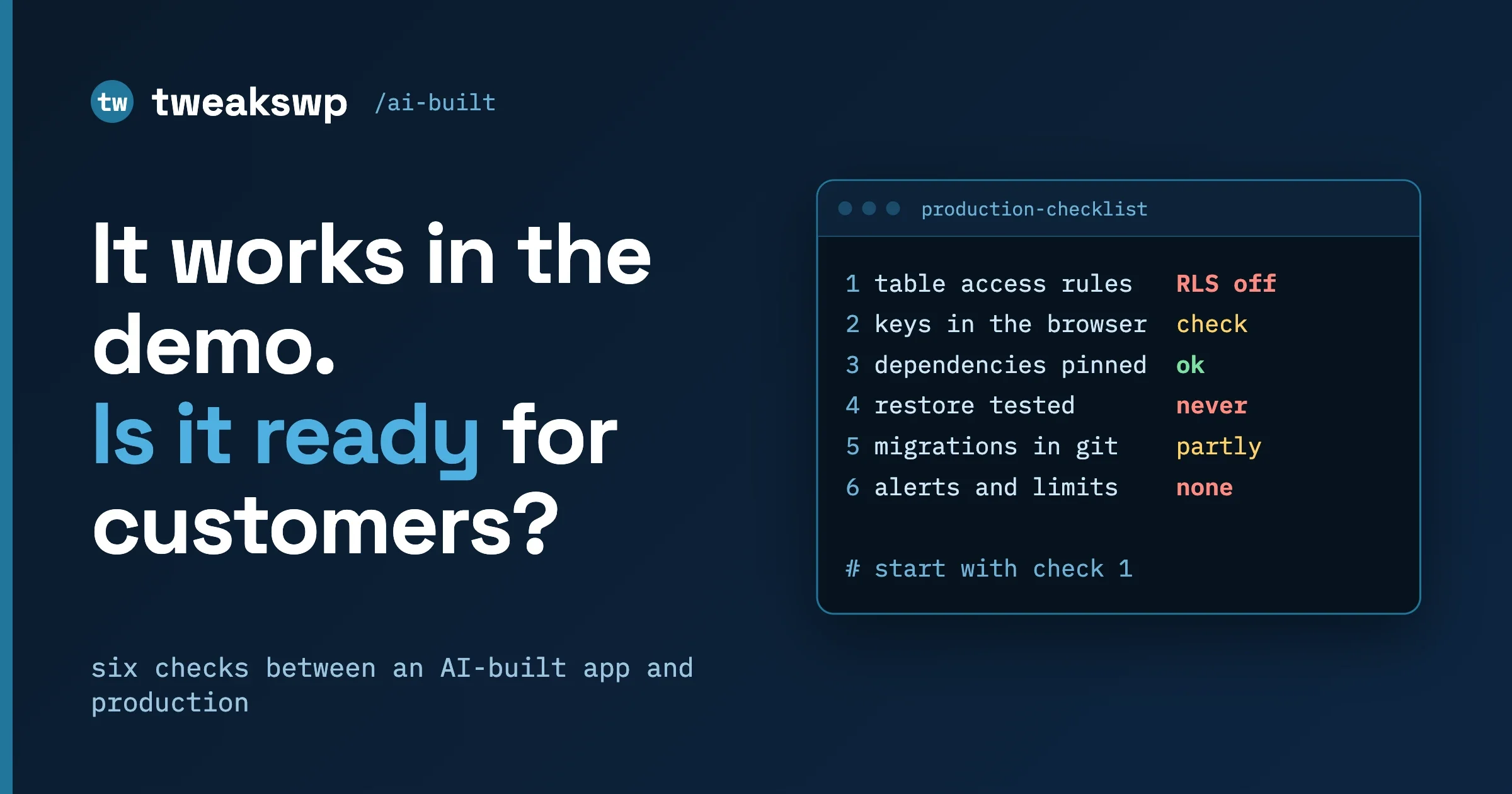
If you or a contractor generates plugin or theme code with AI, run it through a real security review before it touches production. That means the WordPress fundamentals the model tends to skip: capability checks, sanitization, escaping, nonces, prepared queries. Our review-gate checklist for AI-generated code is exactly this, and it is the single most effective thing a developer can do about the risk they are personally introducing.
Close the patch gap
Because vulnerable code will get through despite your best efforts, keep everything current so known holes close fast. The gap between a fix being released and your site applying it is when the ecosystem’s vulnerabilities become your incident. Automate updates for the plugins you trust, and monitor for disclosures affecting what you run.
Assume some bad code gets through
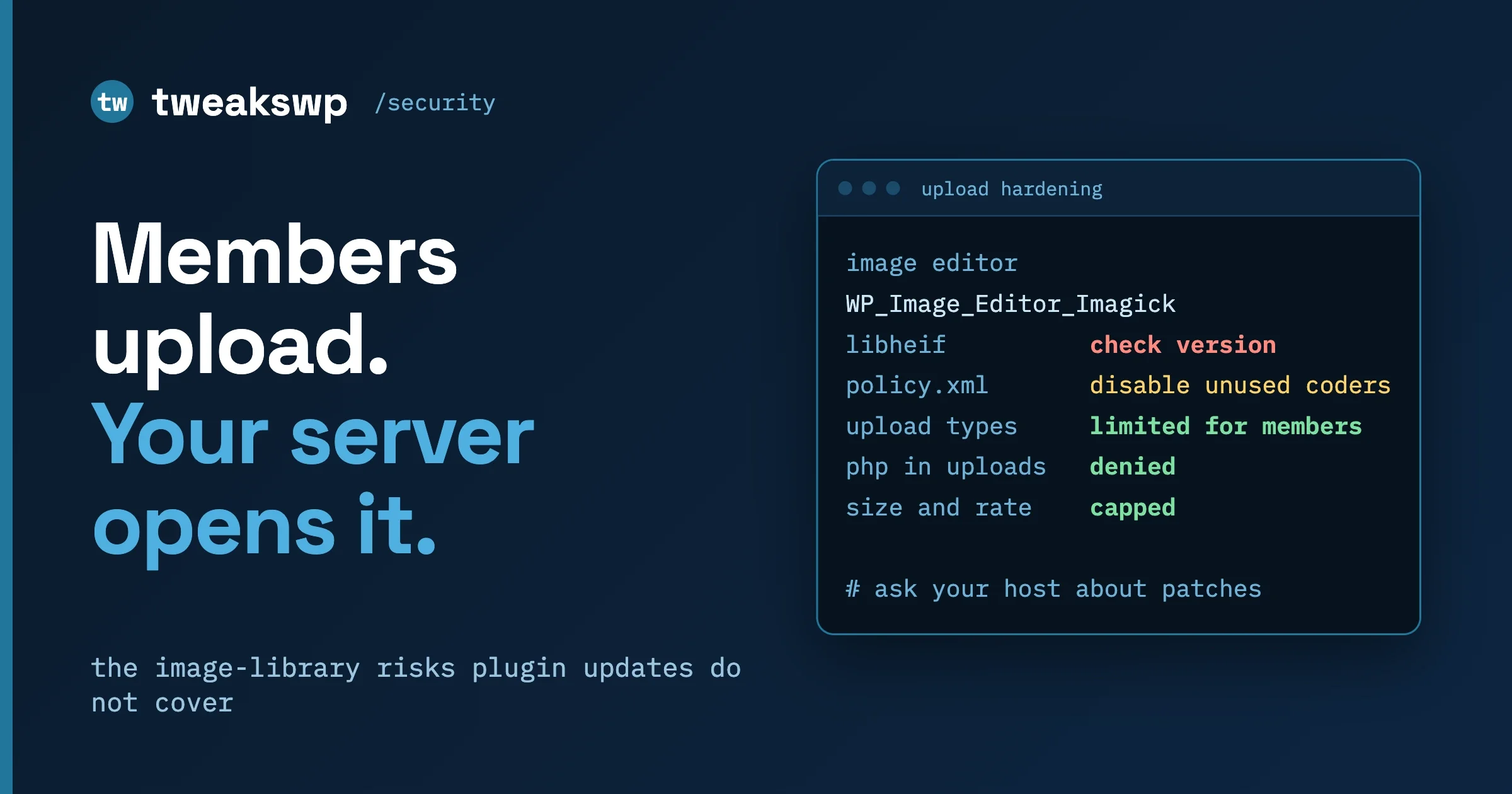
Defense in depth is the honest response to a risk you cannot fully prevent. Least-privilege database users, tight file permissions, a web application firewall, security headers, and server-level protections like Fail2ban all limit what a single slipped-through flaw can do. You will not catch every AI-introduced bug in every plugin; the goal is to ensure that the ones you miss cannot reach far.
WordPress is not alone, and that is instructive
Every software ecosystem that ingests AI-written code faces this, and the parallels are worth learning from. The npm and package-registry world has spent years dealing with supply-chain risk, dependencies you never audited running in your build, and the hard-won lessons apply here: minimize dependencies, pin and monitor what you use, and assume any link can be the weak one. WordPress’s plugin ecosystem is its version of that dependency tree, and the arrival of AI-written code makes the same discipline necessary. The advantage WordPress has is openness: unlike a closed platform, you can inspect, control, and harden what you run. The risk is shared across the industry; the response is the same disciplined dependency hygiene other ecosystems already learned the hard way.
What plugin developers should do
If you build plugins, you are now a link others trust, and the responsibility scales with your install count. Use AI to generate if you like, but gate every line through security review before release, run static analysis that enforces the WordPress security rules, and never ship AI output straight to users because it looked finished. The polish of AI code is exactly what makes it dangerous to trust on sight. Your users cannot review your code; they are trusting that you did, and in an AI workflow that trust is worth only as much as your review gate.
Can static analysis catch AI-introduced vulnerabilities in plugins I install?
For plugins you install, you rarely run static analysis on their code, so no, not in practice. Static analysis is a tool for developers on their own code, which is where it is highly effective. For third-party plugins, your defenses are a lean footprint, security-responsive authors, updates, and site hardening rather than scanning their source yourself.
Are premium plugins safer than free ones from this risk?
Not automatically. Paying for a plugin buys support and often faster patching, which helps, but it does not guarantee the code was reviewed rather than AI-generated and shipped. Judge a plugin on how responsibly its author handles security and updates, not on price alone.
Frequently asked questions
Is AI-generated plugin code inherently unsafe?
Not inherently, but it carries a higher defect rate when shipped without review. AI is a fast author that reliably handles the happy path and skips security-relevant lines. Reviewed properly, its code can be as safe as any; shipped unreviewed, it concentrates exactly the flaws attackers look for.
How do I know if a plugin used AI to write its code?
Usually you cannot, and that is part of the problem. There is no label. This is why the defense shifts from vetting the author to reducing your plugin footprint, favoring security-responsive maintainers, and hardening your site so a slipped-through flaw is contained rather than catastrophic.
Should I stop auto-updating plugins to avoid new AI code?
No. The risk of running known-vulnerable old code is far greater than the risk of a fresh update. Keep auto-updates on for plugins you trust; the patch gap is a bigger, better-understood danger than freshly shipped code. Pair updates with a lean plugin set and site hardening.
Does a security plugin protect me from this?
Partly. A security plugin adds firewalling, monitoring, and known-threat detection, which help contain damage, but it will not detect an ordinary logic flaw an AI introduced into another plugin. Treat it as one layer of defense in depth, not as a solution to the supply-chain problem itself.
Is this a reason to avoid WordPress?
No, the risk is not specific to WordPress; every ecosystem that ingests AI-written code faces it. WordPress’s large plugin ecosystem makes the surface bigger, but its openness also means you can inspect and control what you run. The answer is disciplined defense, not switching platforms.
What is the single most important thing a site owner can do?
Run fewer plugins. Every plugin you remove is a link you no longer have to trust, and it is the one defense that requires no technical skill and helps against every version of this risk at once. A lean, well-chosen plugin set on a hardened, up-to-date site is far harder to reach than a sprawling one, no matter who or what wrote the code inside each plugin.
Will the ecosystem get better at catching this over time?
Likely yes, as scanning tools, review practices, and disclosure processes adapt to AI-written code, much as other ecosystems adapted to dependency risk. But that adaptation takes time, and in the meantime the volume of unreviewed AI code keeps growing. Defending your own site now, rather than waiting for the ecosystem to catch up, is the sensible stance.
The bottom line
The WordPress supply chain gained a new link in 2026, and no one is checking it. AI writes a growing share of the plugins and themes on live sites, faster than the ecosystem can review, quietly raising the defect rate of the code everyone trusts. The old defenses, reputation, checksums, malware scanners, were built for a different threat and slip past this one. The response is not panic but discipline: run fewer plugins, favor authors who patch fast, review any AI code you add yourself, keep everything current, and harden your site so the bugs that get through cannot reach far. You cannot audit the whole ecosystem, but you can make your own site a small, well-defended target in an ecosystem carrying more unreviewed code than ever.
Plugins we build and run
We maintain these ourselves, which is why we can support them on your site.
- BuddyNextThe self-hosted community engine for WordPress
- BuddyXFree community theme, Pro when you outgrow it
- ReignPremium community theme. Add pieces, build anything
- JetonomyCommunity forum and Q&A for WordPress
- EventonomyEvents and RSVPs for WordPress communities
- LearnomyCourses and learning communities on WordPress
- ListoraDirectories and listings your members can browse
- SnipShareCode sharing built for developer communities
- WB Ad ManagerAd placements that turn traffic into revenue
- WP Career BoardA job board your community actually uses
- WP Sell ServicesSell services with offers, orders, and payouts
- MediaVersePhotos, video, and media albums for members
- WB GamificationPoints, badges, and rewards that keep members active
- Product RoadmapPublic roadmaps with voting your users trust