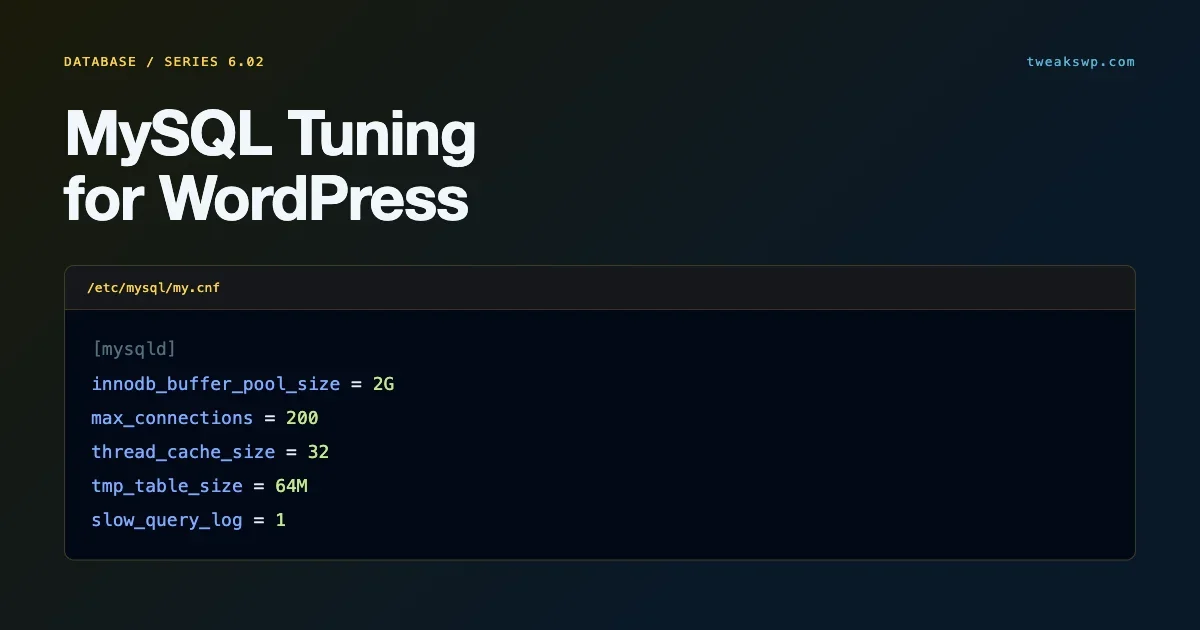
MySQL Tuning for WordPress: innodb_buffer_pool_size and Key Settings
MySQL tuning guide for WordPress covering innodb_buffer_pool_size, max_connections, thread_cache_size, tmp_table_size, slow query log, and a complete my.cnf configuration.
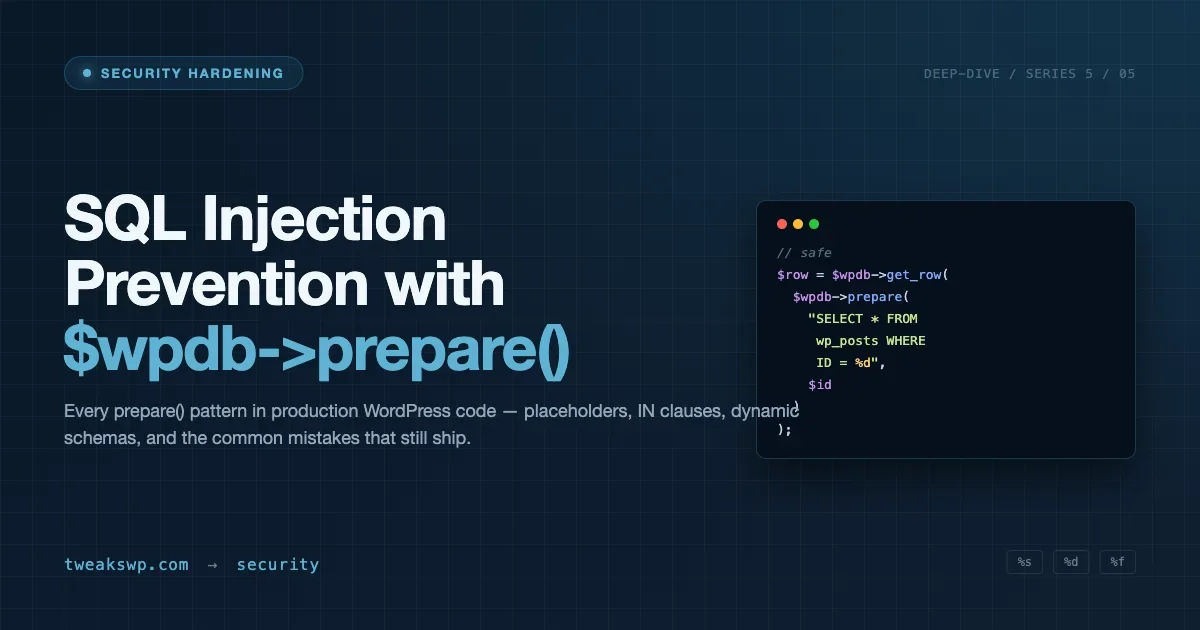
Every WordPress database query that concatenates user input without $wpdb->prepare() is a ticking time bomb. This guide covers every prepare() pattern in production code.
Content moderation features add database queries to every page load. This guide covers the performance pitfalls of WordPress community moderation — N+1 queries, uncached block lists, per-item report checks — and how to fix them with proper caching, batching, and schema design.
Learn every WordPress lazy loading technique: native loading=lazy, the wp_lazy_loading_enabled filter, iframe lazy loading, comment pagination, and the Intersection Observer API for custom implementations.
Convert your WordPress database from MyISAM to InnoDB for better performance, crash recovery, and row-level locking. Step-by-step guide with WP-CLI commands.
Redis and Memcached both slash WordPress database queries by 80%. Here is how each works, real benchmarks from a WooCommerce store, and when to pick which one.
Most WordPress crashes start in the database. After reviewing hundreds of sites, these are the 11 database mistakes that cause the most damage — and exactly how to fix each one.
A systematic 10-step WordPress performance audit: measure baseline, diagnose TTFB, profile database queries, isolate slow plugins, audit render-blocking assets, optimize images, verify caching layers, check CDN coverage, clean the database, and evaluate hosting. Includes WP-CLI commands and SQL queries.
A complete guide to WordPress database maintenance: OPTIMIZE TABLE for InnoDB and MyISAM, WP_ALLOW_REPAIR, WP-CLI db optimize, phpMyAdmin operations, monthly cron automation, and monitoring database health with SQL queries.
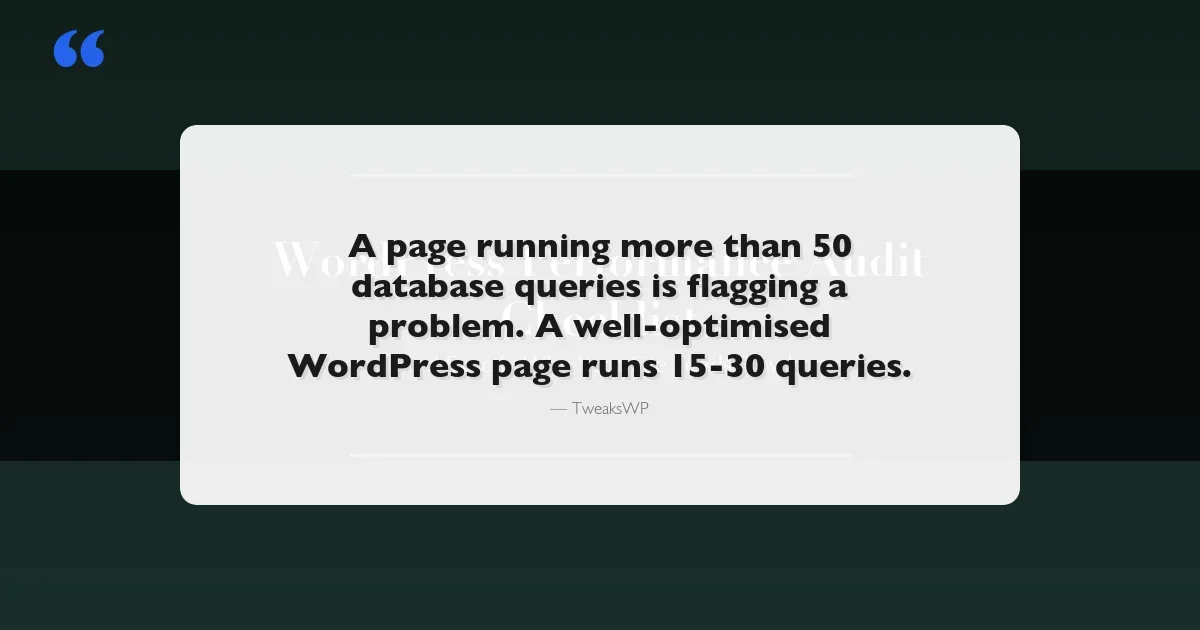
Slow database queries hide inside plugin loops and poorly-written WP_Query calls. This guide covers SAVEQUERIES, Query Monitor, fixing N+1 loops, update_post_meta_cache, MySQL EXPLAIN, adding wp_postmeta indexes, and transient caching.
Learn how to add custom database indexes to wp_postmeta in WordPress. This step-by-step guide covers diagnosing slow queries with EXPLAIN, adding meta_value indexes, automating with an mu-plugin, and benchmarking query performance improvements of 80% or more.