16 Widely Used AI Tools To Improve Your Productivity

Marketing can feel like a constant scramble for attention, and getting real results out of it gets harder every year in an already crowded online space. Between managing multiple funnels and needing to be everywhere your audience is, the workload adds up fast. That’s where AI tools genuinely help. Here are 16 worth knowing for marketing productivity.

1) MarketMuse-AI tools for marketing
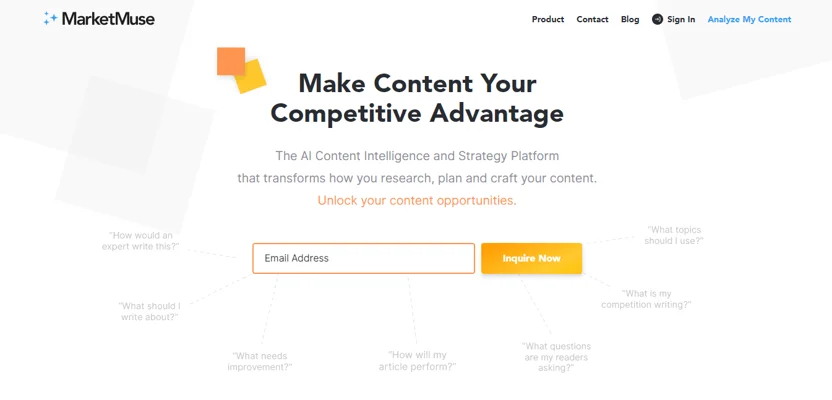
Getting the full SEO value out of branded content is usually a slow, drawn-out process. MarketMuse speeds that up with AI-driven content research, competitive analysis, and SEO recommendations, surfacing search terms your site hasn’t targeted yet.
The free version lets marketers find and fill content gaps. The cloud-based tool reviews how relevant a page is to a given topic and reports keyword frequency alongside recommendations for improvement, effectively doubling down on existing content, optimizing it to rank for more keywords and drive better engagement, while also flagging new content opportunities prioritized by likely impact.
2) Exceed.ai-AI tools for marketing
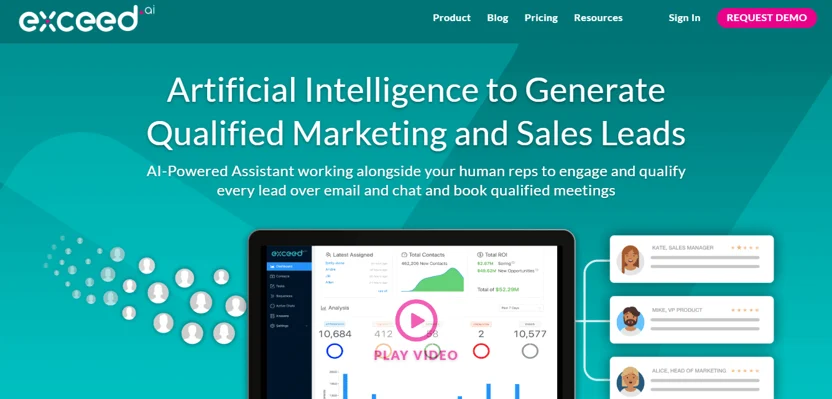
A Gartner study found the average B2B purchase decision now involves 6.8 people. Exceed.ai works as a sales assistant that personalizes chat and automates email outreach, gauging what a prospect actually needs before a human rep steps into the conversation, aiming for something that feels like a natural exchange rather than a scripted bot.
Lead qualification and follow-up become a real bottleneck at scale, and this cloud-based tool takes that manual load off marketing and sales teams, letting reps engage prospects anytime, anywhere. It includes personalized lead nurturing, a meeting scheduler, and user profiling.
3) Chorus-AI tools for marketing
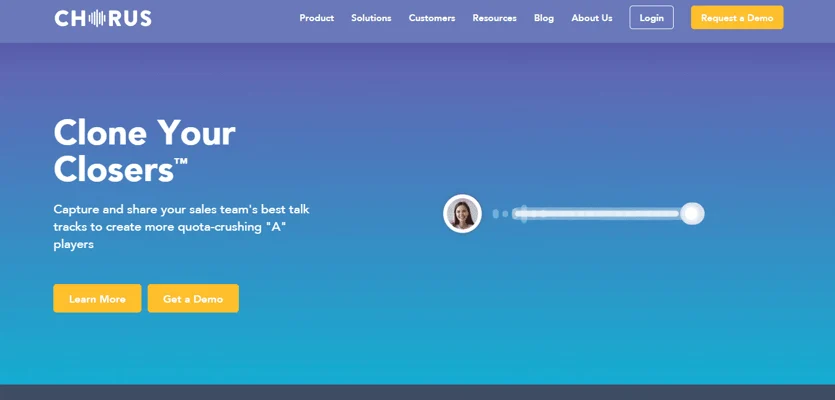
Understanding customer pain points is half the battle in marketing, and Chorus helps by recording and analyzing sales calls with AI, saving time that would otherwise go into manually debriefing the sales team on what did or didn’t close. Notes get logged straight into the CRM, building a running record of customer preferences and insight, letting reps spend more time actually selling instead of writing up call summaries.
1) Reviews every deal against conversion metrics.
2) Identifies and replicates behaviors tied to hitting quota.
3) One-click integration with existing sales tools and workflows.
4) Lumen5-AI tools for marketing
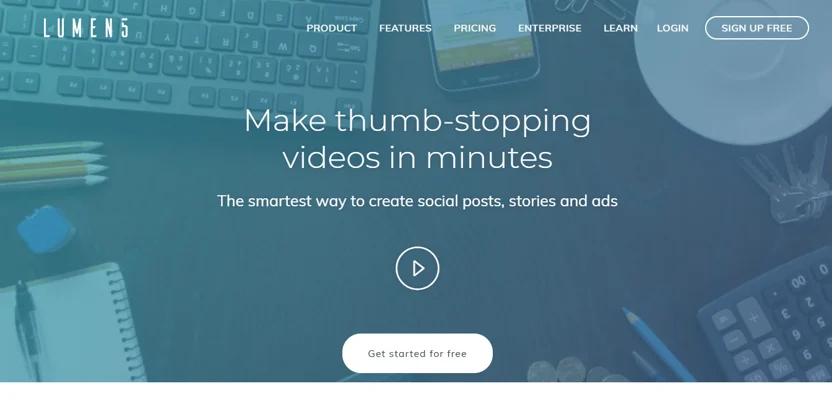
Lumen5 takes the manual work out of building professional-looking slideshow videos, using AI to compress a blog post into a video draft. Paste in a blog article’s link and it generates an editable slideshow you can refine into a final video, adding music, a brand logo, and images along the way. The premium version runs $49/month.
1) Pull from millions of stock images via Shutterstock, Getty, and others for a professional look.
2) Build attention-grabbing videos with styles tailored specifically for social media.
3) Well suited for social ads, feed posts, and stories.
5) NetBase-AI tools for marketing
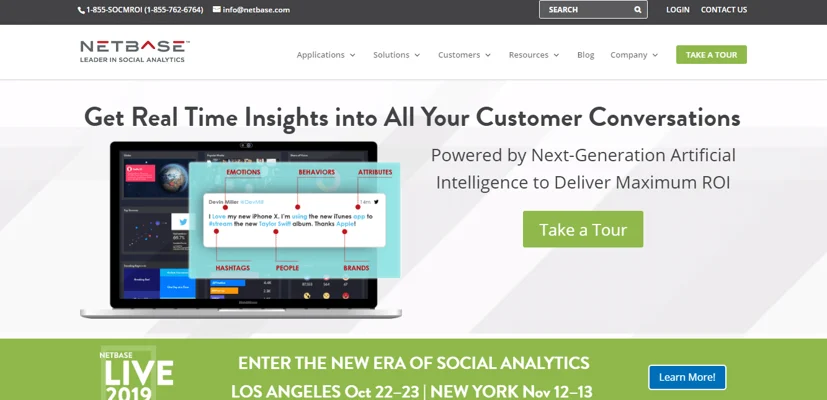
NetBase surfaces real-time insight into how audiences are reacting to company news and updates, analyzing millions of social conversations quickly so marketers can spend more time on strategy and less on manual monitoring. Social listening is already a common way to track competitors, audience sentiment, and brand mentions, and NetBase pushes that further with machine learning and deep learning layered into the process, breaking insights down by influencer, gender, language, and location for a more granular view.
1) Delivers the real-time customer perception you need to actually act on your goals.
2) Scales to handle enormous conversation volumes, trillions of data points, ready to analyze.
3) Leans fully on machine learning, deep learning, and expert systems for actionable insight.
6) Google AutoDraw-AI tools for marketing
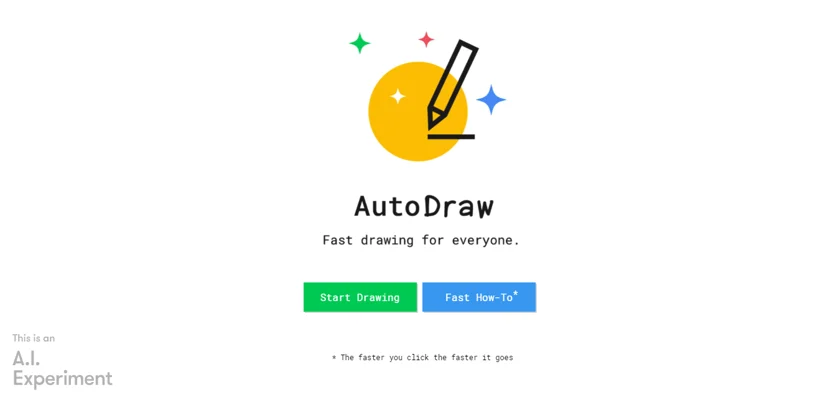
Any marketer knows the pain of scrolling through stock and vector illustration sites looking for the right image for a piece of collateral. Google’s AutoDraw skips that entirely: start doodling and it suggests cleaner versions of what you’re drawing, turning a rough sketch of a cake or a flower into a polished icon.
A rough, childlike flower sketch, for instance, brings up a menu of cleaner options at the top to pick from. It’s a drawing tool built on machine learning trained from professional artists’ work, aimed at helping anyone produce something visual, fast.
7) Xinoah-AI tools for marketing
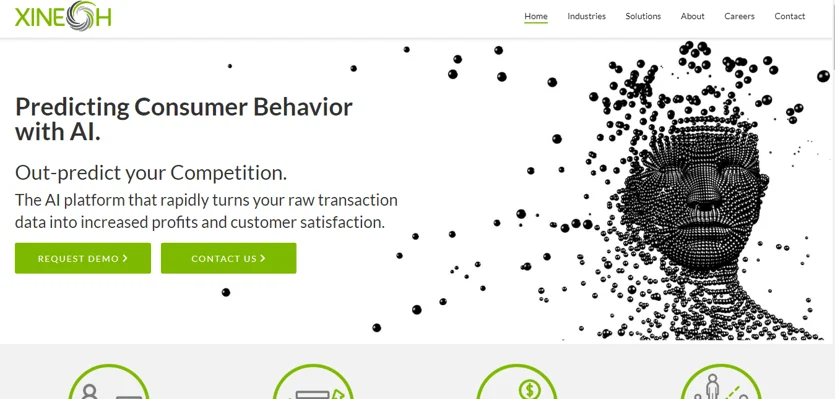
Xinoah offers AI-driven demand prediction, pricing solutions, and media/product recommendation engines, helping marketers analyze large datasets quickly to improve the customer experience. It’s built for verticals like retail, media, eCommerce, and finance.
A Salesforce study found 76% of consumers want companies to understand their needs and expectations. With today’s mobile-savvy audiences having more choice than ever in products, content, and services, personalization has become a real competitive edge, and forecasting customer behavior is one place AI genuinely helps marketers deliver on that.
1) Gives access to state-of-the-art AI that smaller businesses couldn’t otherwise compete for, since hiring top data scientists is out of reach for most companies.
2) Free access makes custom modeling more accessible, though results still aren’t guaranteed.
3) Real upside exists here: using AI to show customers the right item at the right time reportedly saved Netflix $1 billion in a single year.
8) OneSpot-AI tools for marketing
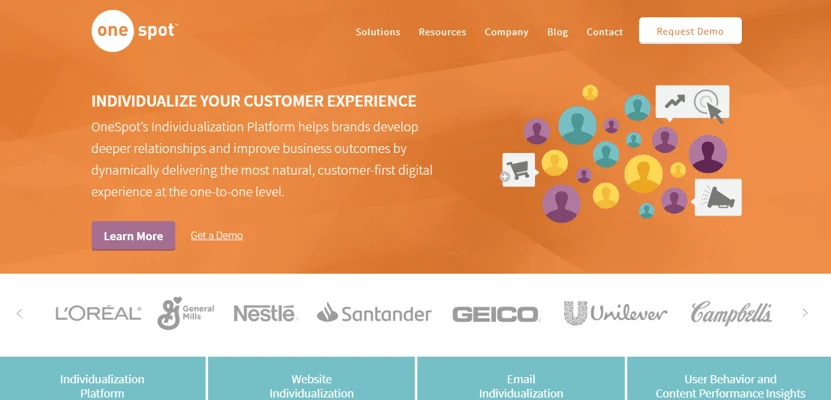
OneSpot uses machine learning to understand user behavior and context and match it to the right content, breaking branded content into topics and sub-topics to identify individual preferences before delivering it through the right channel. Personalizing content at the level of an individual visitor across every channel used to sound unrealistic, AI has made it genuinely workable.
1) Builds deeper relevance by creating an interest profile for every visitor, new or returning, letting a brand personalize content for 100% of its email subscribers and site visitors.
2) Boosts actions like “Find in Store” or “Buy Now” by surfacing contextually relevant products and offers based on individual interest.
3) Supports better editorial decisions with insight into how content is landing with the audience, surfacing quality scores and engagement data to spot what’s working fast.
9) Node-AI tools for marketing
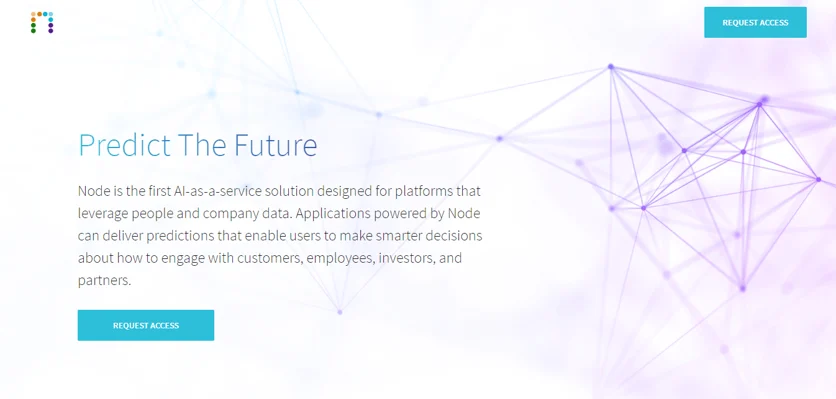
Node bills itself as the first automated machine learning solution built specifically for platforms leveraging company and people data. Powered by its Artificial Intuition technology, it lets product teams build and scale AI-driven prediction features, internal or customer-facing, through a standard API set up in minutes, helping marketers surface new leads and guide them through conversion.
Node maps connections between entities on the web, people, products, companies, and applies algorithms to identify who’s likely to want a given product or engage with a specific company. Two example use cases: event management, personalized content and session recommendations, new-participant suggestions; and applicant tracking, surfacing new applicant recommendations, top-performer patterns, and identifying at-risk employees early.
10) Atomic Reach-AI tools for marketing
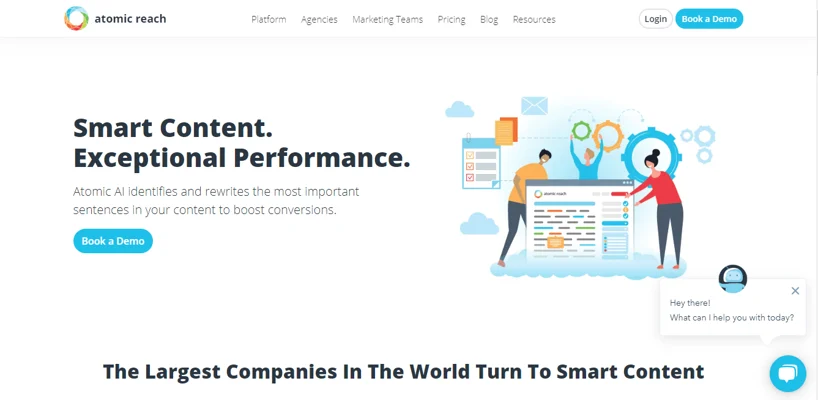
Atomic Reach’s AI flags the most important sentences in your content to boost conversions, and suggests better phrasing and word choices along the way, useful on days when finding the right words for an ad feels harder than it should. It audits branded content across paid ads, blogs, and email, aiming to improve quality and relevance while cutting down on editing time.
1) Analyzes your content against customer data to show the gap between a piece’s tone and how credible it reads to your actual audience.
2) Builds a custom profile per customer segment, predicting the ideal content recipe and presentation for each piece.
3) Optimizes content by surfacing the specific words and phrases that resonate with your audience.
11) Aivo-AI tools for marketing
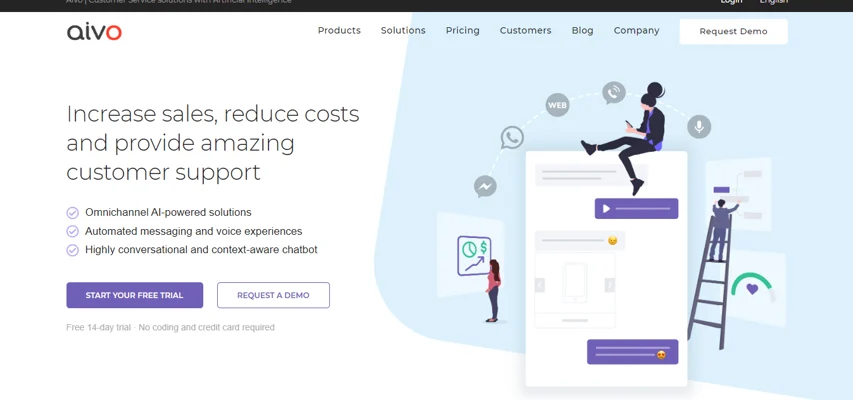
Aivo offers voice and chat-based customer service tools that field questions directly, freeing up time and resources for teams that would otherwise handle every inquiry manually. Good customer service is central to retention, and Aivo’s natural language models aim to make automated conversations actually feel useful rather than frustrating.
It’s built to be manageable without a large team behind it, giving you control over the customer experience while customizing conversation flow to match your brand across devices and funnels. It handles roughly 22% of the most common questions automatically across channels, from text-based messaging to voice assistance.
12) Seamless.AI-AI tools for marketing
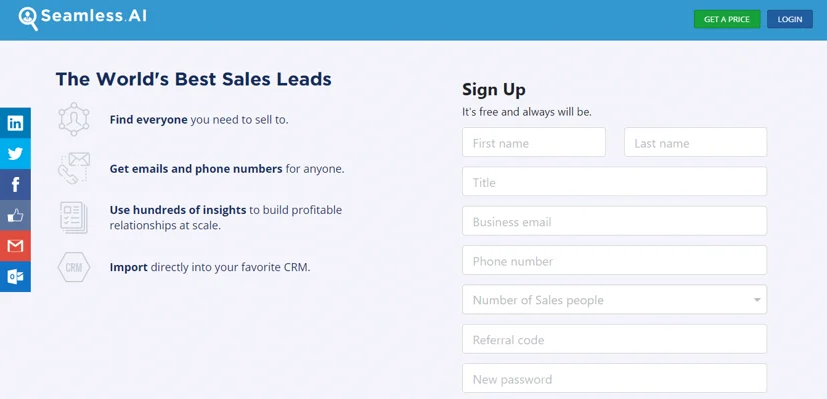
Seamless.AI helps sales and marketing teams build contact lists, with a free tier and an unlimited plan at $96/month. It pulls phone numbers, bios, and email addresses to build and maintain a prospect list with far less manual research, plus support for pitch prep and data validation. Some features:
1) AI-validated emails and phone numbers for every target account and contact.
2) Quickly build lists of your most valuable, high-potential contacts.
3) Get background information and talking points for every target account and contact.
4) Instantly view target accounts and contacts across specific platforms, including social profiles and feeds.
5) Build a list of your most valuable and profitable accounts quickly.
13) Crayon-AI tools for marketing
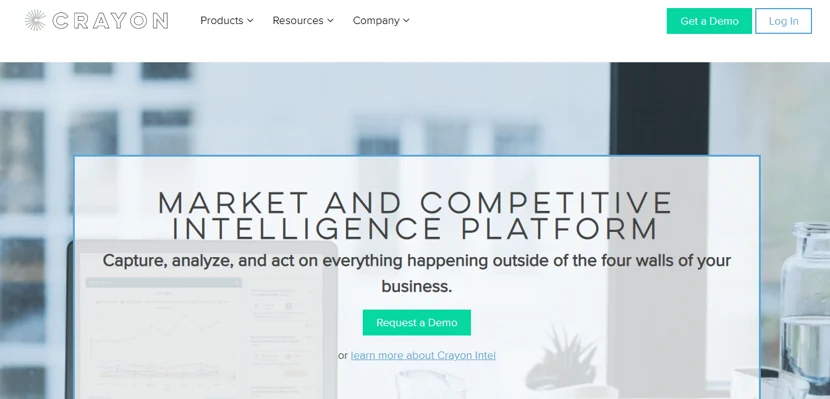
Crayon uses AI to remove the manual effort from tracking competitors across the web, keeping competitive data in one dashboard so marketers can make faster strategic calls. It sends daily email summaries covering pricing changes, product launches, and other industry updates. Manually tracking competitor content across social platforms is genuinely time-consuming, and Crayon automates most of it.
The tool tracks more than 100 data types across 300+ sources for a full picture of the competitive landscape, automatically capturing competitor moves and surfacing everything from marketing events to pricing shifts and customer reviews, so more time goes into acting on findings than digging for them.
14) WordLift-AI tools for marketing
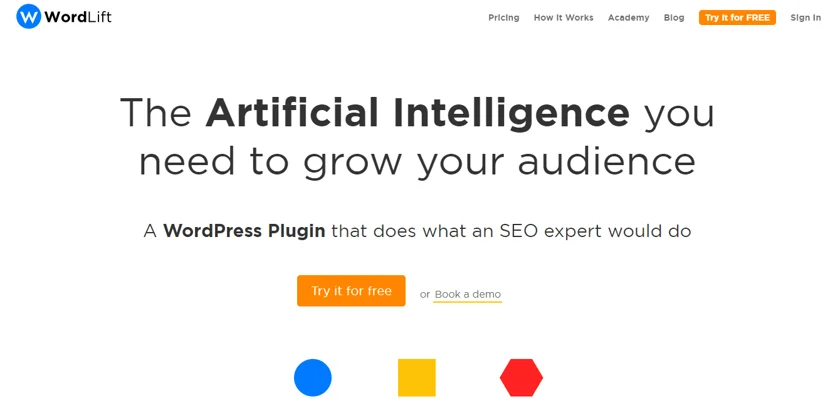
WordLift is one of the first semantic SEO plugins for WordPress, using natural language processing and linked-data publishing to automate structured data markup. It analyzes articles and converts text into machine-readable content to improve engagement and organic traffic, along with content suggestions. How it works:
1) Organize your content:- Recommends facts and context, adding semantic markup so search engines fully understand what your site is actually about.
2) Make it engaging:- Helps enrich content with images and data visualizations like timelines and maps, for a more compelling reader experience.
3) Connect and publish:- Adds relevant recommendations so readers dig deeper into your content, while surfacing new ways to monetize and distribute what you’ve published.
15) Automizy-AI tools for marketing
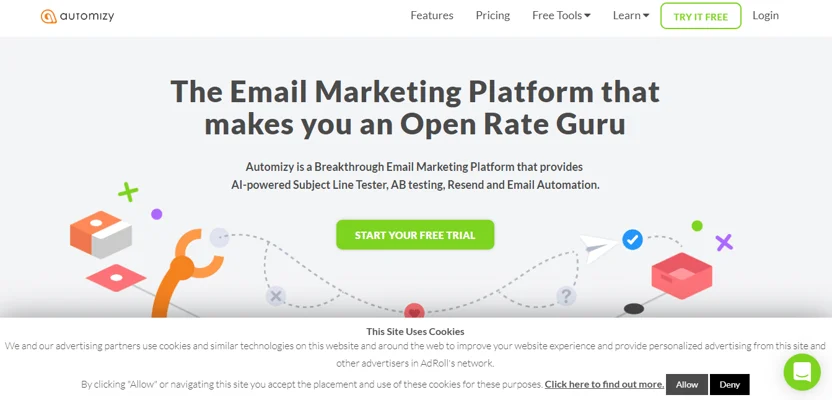
Automizy uses AI to help optimize and analyze email subject lines, as part of a full email marketing and automation platform. It layers in strong analytics and A/B testing to help teams get more out of every campaign, since automation alone only goes so far without the AI-driven optimization on top.
1) AI-powered Subject Line Tester:- Scores a subject line before you hit send, showing how it stacks up against other Automizy campaigns so you can refine it toward a better score.
2) Automatic Resend:- Automatically resends a campaign to non-openers with a new subject line, picking up extra clicks from subscribers who missed it the first time.
3) Machine Learning powered A/B testing:- Write up to four subject line variations for an automated email and let the algorithm optimize for the best open rate automatically.
16) Smartly.io-AI tools for marketing
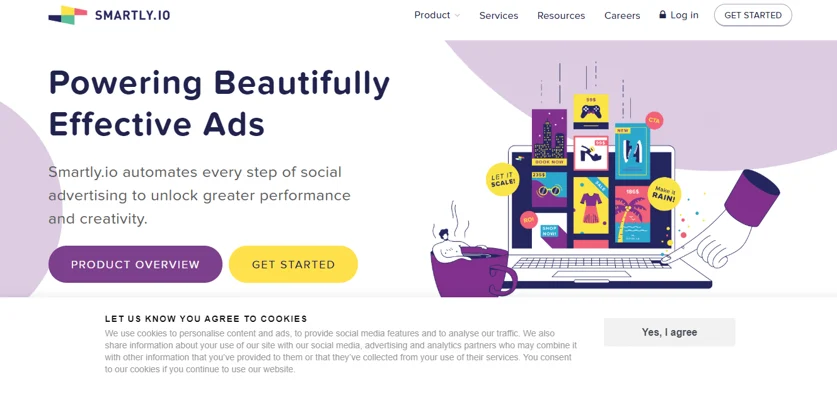
Smartly.io is a cloud-based automation platform that cuts down the manual effort of editing and running premium ad campaigns, helping marketers test and improve creative faster, with built-in tools for building ads across formats. It’s built specifically around scaling paid campaigns on Instagram and Facebook, making it realistic to run data-driven ads at scale and produce video creative that manual production simply couldn’t keep up with, all while automating performance optimization and streamlining campaign management. What comes with the partnership:
1) Creative and performance expertise.
2) 24/5 chat support.
3) Speed and market innovation.
4) Both managed services and self-serve options.
Where AI Actually Helps
AI won’t replace human creativity or strategic thinking, but it does take a real chunk of the repetitive work off a marketer’s plate. These tools are genuinely useful for digging through large datasets for insight on customers, both existing and potential, personalizing content and campaigns at a scale that wasn’t practical before, and automating tasks across content research, competitive tracking, SEO, and paid campaigns. Pick a couple that solve your most immediate bottleneck rather than trying to adopt all 16 at once.